

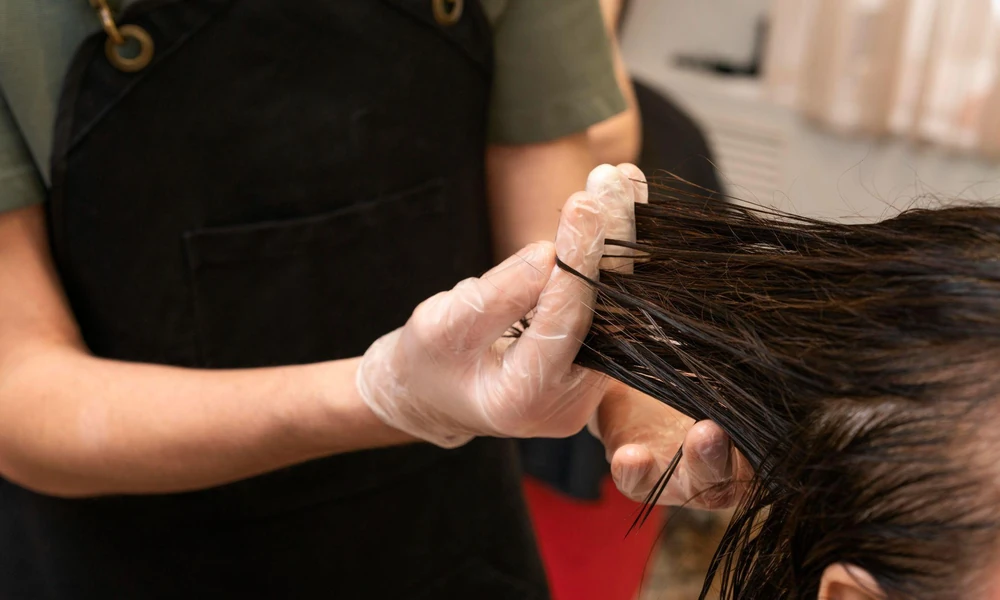
A price listed online for a keratin treatment is almost always a starting figure, not a final one. Hair length, thickness, and how much previous colouring or chemical work the hair has already been through all change how much product a treatment needs and how long it takes to process, which is exactly why two people searching the same price online can walk out having paid noticeably different amounts.
Three Things That Move the Final Number
- Length: hair past the shoulders simply needs more product coverage than a bob, and more product means a higher cost.
- Density: thick, coarse hair absorbs more of the smoothing formula than fine hair does, even at the same length.
- Chemical history: previously bleached, coloured, or permed hair sometimes needs a gentler formulation, and that adjustment can shift the price either way.
Why a Published Starting Price Exists in the First Place
A keratin treatment cost in Singapore that’s quoted online works more like a benchmark than a locked-in number. It tells you roughly where the service sits compared to other salon treatments, but it’s set before anyone has actually seen your hair in person. The real number gets confirmed at a consultation, where a stylist can account for the specifics that a blanket online price simply can’t.
What That Consultation Is Actually Checking For
A short in-person look before the treatment starts isn’t just a formality. A stylist is checking porosity, how much the hair has already been chemically treated, whether there’s uneven colour that needs a different formula strength in different sections, and how much new growth needs blending with previously treated lengths. All of that affects processing time, which is the main driver behind the final cost.
The Add-Ons That Quietly Change a Final Bill
This is also where a keratin treatment price in Singapore search can end up misleading if taken at face value. A base treatment price often doesn’t include a cut, a deep-conditioning add-on, or a stronger formula for very resistant, previously rebonded hair. None of these is hidden fees exactly; they’re optional upgrades, but skipping the conversation about them before booking is how a quoted price and a final receipt end up looking different.
How Long the Treatment Itself Actually Takes
Processing time generally scales with the same factors that affect price: longer, thicker, or more chemically treated hair needs a longer sitting. Shorter hair with no prior treatment history tends to move through the fastest. This is worth asking about upfront too, since a longer appointment affects more than cost, it affects how much of an afternoon needs clearing out.
A Rough Idea of Where Costs Tend to Land
Exact figures vary by salon and by the specifics mentioned above, but the general pattern tends to hold across most places offering the treatment. Shorter, untreated hair sits at the lower end of a salon’s range. Longer or previously chemically treated hair moves up from there, sometimes by a noticeable margin once a stronger formula or extra processing time gets added in.
| Hair Profile | Typical Processing Time | Relative Cost Tier |
| Short, untreated hair | Shorter sitting | Lower end of the range |
| Medium length, lightly coloured | Moderate sitting | Mid range |
| Long or previously bleached/permed | Longer sitting | Higher end of the range |
What Happens When Two People Compare Notes
This is usually the moment the price confusion actually surfaces, when two friends compare what they each paid and get different numbers despite searching the same term. Neither price is wrong. They’re just reflecting two different heads of hair that needed two different amounts of product and time, which is a far more common explanation than an inconsistent or unclear salon pricing structure.
Aftercare Habits That Protect What You Paid For
- Avoid washing or tying hair up for at least the first 48 to 72 hours after treatment, as instructed by the stylist.
- Switch to a sulphate-free shampoo, since regular sulphates strip the smoothing effect faster than expected.
- Skip tight hair ties, clips, or headbands in the first few days, since any crease can set into the hair while it’s still settling.
Why the Same Salon Can Still Quote You Differently Next Time
Even returning to the same salon doesn’t guarantee an identical quote the next time around. Hair grows, gets coloured again, or recovers from a prior treatment differently than expected, and all of that resets the starting point a stylist works from. A second visit isn’t being priced against the first one, it’s being priced against whatever state the hair is actually in on that particular day.
Asking for an Itemised Breakdown Isn’t Awkward
Requesting a clear breakdown before committing, treatment cost, any add-ons, and the cut if one’s included, is a completely normal question to ask a stylist, not an awkward one. It turns an estimate seen online into an actual number you can plan around, rather than a surprise waiting at the till after the appointment’s already done.
Curious what your own hair would actually cost rather than what a generic price tag suggests? Contact Picasso Hair Studio to book a consultation before the number gets decided for you.
