

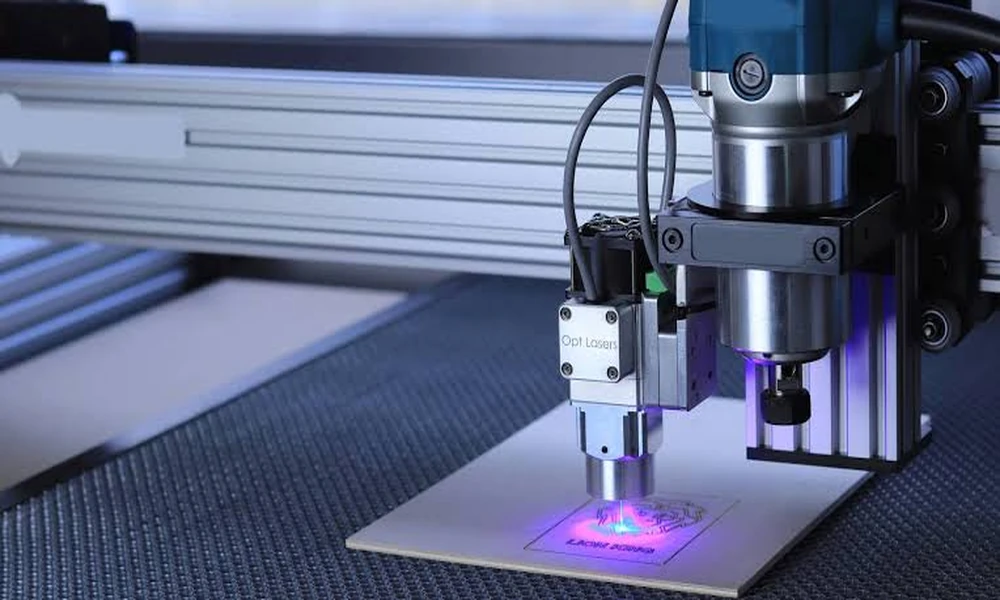
There is no doubt that woodworking has always depended on craftsmanship, precision, and the ability to turn raw materials into useful and attractive products. However, as customer expectations change and more businesses compete for attention, traditional woodworking techniques are increasingly being supported by modern technologies.
One of the most useful additions to a woodworking workshop is a laser cutting machine. A CO2 laser cutter allows businesses to engrave detailed designs, cut intricate shapes, and reproduce components with a level of consistency that can be difficult to achieve using manual tools alone. From personalised wooden gifts to decorative panels and custom furniture components, laser technology is creating new opportunities for both small workshops and established woodworking businesses. But why are more woodworkers incorporating laser cutting into their operations? Here are five important reasons.
1. Laser Cutting Delivers Greater Precision and Consistency
Accuracy is one of the biggest challenges in woodworking, particularly when producing items that require intricate patterns or repeated components. Traditional cutting tools are essential for many woodworking applications, but producing identical detailed shapes manually can take considerable time and skill.
A laser cutter offers another approach. It uses a focused beam of light to remove material along a programmed cutting path, allowing users to reproduce designs with consistent dimensions and detailed edges. This is particularly useful when producing:
- Intricate wooden ornaments
- Decorative wall panels
- Custom furniture components
- Plywood templates and patterns
- Personalised signs and lettering
- Detailed inlays and decorative pieces
Once a design has been prepared and tested, the same file can be used to reproduce it across multiple workpieces.
This repeatability is valuable for businesses that handle recurring orders. Instead of manually measuring and cutting every component, you can use the same digital design to maintain consistency across a production batch. Of course, the final result still depends on material quality, machine calibration, focus, and processing settings. Different wood species and plywood compositions can behave differently under laser exposure, so testing remains important.
2. It Makes Complex Designs Easier to Produce
One of the most exciting advantages of laser cutting is the ability to create intricate designs that would otherwise require considerable manual effort. Woodworkers can use laser software to prepare detailed vector designs, import illustrations, and create complex cutting paths. The machine then follows the programmed artwork to produce the desired shapes. This opens up opportunities for products such as:
- Multi-layered wooden wall art
- Decorative screens and panels
- Intricate geometric patterns
- Custom wooden lampshades
- Detailed model components
- Personalised gift boxes
For example, creating a multi-layered wooden landscape may require numerous carefully cut shapes. With a laser cutter, you can prepare the different layers digitally and reproduce the components with consistent dimensions. The same approach can be used for decorative furniture inserts, custom storage solutions, and architectural models. This does not mean traditional woodworking skills are becoming irrelevant. Sanding, assembly, finishing, and structural construction still require craftsmanship. Rather, laser technology gives woodworkers another tool for producing detailed components more efficiently.
3. Laser Cutters Can Improve Production Efficiency
Time is an important resource in any woodworking business. Every hour spent measuring, marking, cutting, and correcting mistakes affects how many orders you can complete. A laser cutter can help simplify several parts of this workflow. Once a design has been prepared, you can send it to the machine and reproduce the same pattern across multiple pieces. You can also arrange several components on a single sheet of material, reducing the need to process each item separately. This can be particularly useful when manufacturing:
- Wooden coasters and keyrings
- Small furniture components
- Signage and decorative lettering
- Packaging inserts
- Repeated craft components
- Personalised gift products
Laser cutting also reduces the need for certain manual cutting operations, although finishing and assembly may still require additional work. The actual time savings depend on the complexity of the design, material thickness, machine power, and production settings. However, for businesses regularly producing detailed or repeated designs, the ability to automate cutting paths can make a meaningful difference. Another advantage is that digital files can be stored and reused. If a customer places the same order several months later, you do not necessarily need to recreate the design from scratch.
4. They Make Product Customisation Easier
Personalisation is an important opportunity for woodworking businesses. Customers often want products that reflect their homes, businesses, interests, or special occasions. They may request custom dimensions, names, logos, messages, or decorative patterns. Producing these variations manually can be time-consuming, especially when every order involves a different design.
A laser cutter makes it easier to accommodate custom requests because designs can be modified digitally before production. For example, a business producing wooden signs could change the lettering and dimensions for each customer. A gift manufacturer could personalise each wooden box with a different name. A furniture workshop could also create decorative panels based on a customer’s preferred pattern. This flexibility allows businesses to offer more than standard catalogue products. It also creates opportunities to work with other industries, including:
- Interior designers
- Event planners
- Sign makers
- Furniture manufacturers
- Gift retailers
- Local businesses requiring branded products
Instead of competing solely on the price of standard wooden products, you can differentiate your business through customisation and design.
5. Laser Technology Helps Woodworking Businesses Diversify
Another reason laser cutting machines are becoming popular is their ability to support multiple product categories. A woodworking business does not have to limit itself to furniture or conventional wood products. With a suitable CO2 laser, it can explore additional applications involving compatible materials such as acrylic, leather, paper, cardboard, and certain fabrics. For example, a workshop that primarily manufactures wooden furniture could also offer engraved business signs, acrylic displays, personalised gifts, and decorative accessories.
This can help businesses reach different customer groups and reduce their dependence on a single product category. It also makes it easier to experiment with new ideas. You can create samples, test customer interest, and introduce new products without completely changing your workshop setup.
However, material compatibility is essential. Not every plastic or composite material is safe to process with a laser. PVC and other chlorine-containing materials must never be laser cut or engraved because they can release hazardous gases.
What Should a Woodworking Business Look for in a Laser Cutter?
If you are considering adding a laser cutter to your workshop, there are several factors worth comparing.
- Laser power: Choose a power rating that matches the thickness and type of materials you intend to cut. Higher power can improve cutting capability, but it is not automatically necessary for every woodworking application.
- Working area: A larger bed allows you to process bigger panels and arrange multiple components in one job. This can be especially useful for businesses producing signs, furniture parts, or decorative panels.
- Air assist: Air assist helps remove smoke and debris from the cutting area, supporting cleaner processing and reducing excessive charring.
- Cooling and ventilation: CO2 laser tubes require appropriate cooling, while cutting wood produces smoke and particles that must be extracted safely.
- Software compatibility: Look for a machine that supports suitable design and laser control software, such as LightBurn or RDWorks.
- Workbed configuration: Different worktables can provide better support for particular materials and cutting applications. Consider whether adjustable workbed height or interchangeable tables would benefit your projects.
Which OMTech Laser Cutters Are Worth Considering?
OMTech offers a range of mid-range CO2 laser engravers designed for different workshop requirements. For a woodworking business, this range is worth exploring because it provides options with different power ratings and working areas. You can compare machines based on the size of your typical projects, the thickness of materials you need to cut, and the amount of production you expect to handle.
A smaller machine may be sufficient for personalised gifts and decorative accessories, while a larger model can provide more room for wooden panels, signage, and repeated production runs. The important thing is to match the machine to your actual workload rather than automatically choosing the highest wattage available. If you regularly produce larger components, prioritise working area and material capacity. If your business focuses on intricate engraving and smaller products, accuracy, software compatibility, and workflow features may be more important.
Final Thoughts
Laser cutting machines are becoming valuable additions to woodworking businesses because they offer a combination of precision, repeatability, design flexibility, and production efficiency. They allow woodworkers to produce intricate patterns, reproduce components consistently, accommodate personalised orders, and explore new product categories. However, laser technology does not replace every traditional woodworking process. Cutting, assembly, sanding, finishing, and structural construction still require appropriate tools and skills. The real advantage comes from combining laser technology with existing craftsmanship. By using each tool for the tasks it handles best, woodworking businesses can improve their production workflow and offer customers more creative possibilities.
If you are considering investing in a laser cutter, start by identifying the projects that would benefit most from laser processing. Then compare power, working area, safety features, and material compatibility to find a machine that supports your business today while leaving room for future growth.
